
Scroll down to explore more
The power of synthetics.
The safety and sustainability of biologicals.
Vestaron is leading a revolution in crop protection with new peptide technology. Our insecticides deliver powerful new modes of action to rival traditional synthetics in efficacy backed with the safety and sustainability of biologicals.
We’re providing growers with the tools they need to manage resistance, protect crop yield and quality, and increase sustainability across the agriculture and food industries.
Our products
New Peptide Technology. New MOA.
Our SPEAR® brand portfolio of insecticide products – and the upcoming release of BASIN™ Flex insecticide – deliver new modes of action that effectively target pests on high-value crops. With no known resistance or cross-resistance, SPEAR works as a stand-alone or in rotation with conventional insecticides.

SPEAR® LEP

SPEAR® RC

SPEAR® T
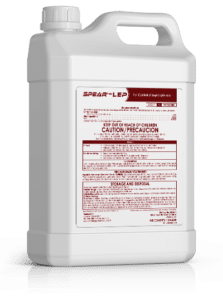
SPEAR® LEP
Designed for use on tree nuts, fruits, vegetables, and specialty crops, this peptide-based insecticide targets lepidopteran pests and insect resistance with a novel MOA (Group 32).
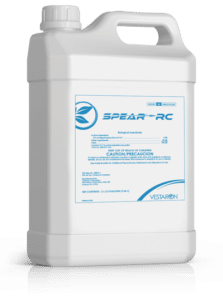
SPEAR® RC
Vestaron’s groundbreaking insecticide for broad acre row crops, effectively targeting lepidopteran pests while providing a long list of environmental and safety benefits.
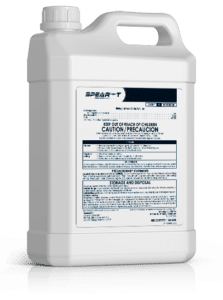
SPEAR® T LIQUID CONCENTRATE
For strong control of major greenhouse pests like aphids, spider mites, spotted-winged drosophila, thrips and whiteflies, and an excellent safety profile for pollinators and beneficials.

0-Day PHI

MRL exempt

Novel MOA

SPM tool

Beneficial friendly

4-Hour REI

High efficacy
Hear from our customers


The science behind peptide technology insecticide
The R&D team at Vestaron has identified and isolated naturally-occurring peptides (small proteins made up of amino acids) with insecticidal properties – such as those found in spider venom – for the creation of a highly-targeted and effective insecticide. These peptides are then optimized and manufactured using a natural fermentation process.
Our products break down into amino acids after use, resulting in a 4-Hour re-entry interval, 0-Day preharvest interval, and MRL exemption. They are also environmentally friendly, with reduced impacts to pollinators and beneficials, water, soil and local biodiversity.

Sustainability
We are leaders in harnessing biotechnology to enhance the sustainability value of agricultural land. Our mission is to convert more acres to sustainable pest management, reduce reliance on synthetic chemical pesticides, increase honeybee and beneficial insect populations, and bring more safe novel modes of action to the market quickly.


